Three Indian Teens, One Tamarind-Seed Powder, and a World-First Win at The Earth Prize 2026
Most science fair projects end up on a poster board in a school corridor. This one ended up winning a global vote of 23,000 people, a $12,500 grant, and a place in the history books as the first-ever Global Winner from India. Three 16-year-old school students from Jaipur didn't just build a science project — they built a working solution to one of the world's most invisible pollution problems, using nothing more exotic than waste tamarind seeds and a handheld magnet.
Meet the Teen Team Behind Plas-Stick
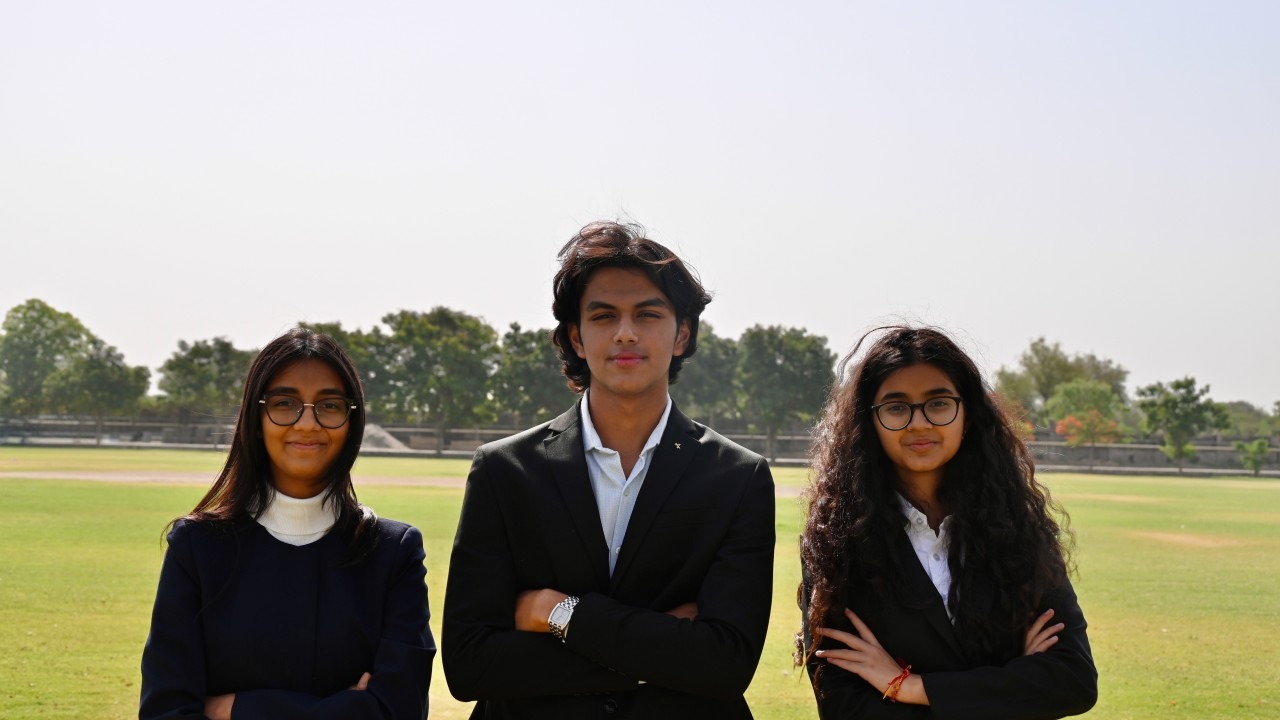
Vivaan Chhawchharia, Ariana Agarwal, and Avyana Mehta are all 16-year-old school students from Jaipur, Rajasthan. None of them come from a specialised STEM research background — their invention grew out of a school environmental science course and a single field trip that changed how they saw an everyday problem.
The Invention That Made Global Headlines
Their creation, called Plas-Stick, tackles a problem most people never think about: microplastics — tiny plastic particles smaller than five millimetres — silently contaminating shared household drinking water in communities without access to filtration systems.
Here's how it works, in plain terms:
The raw material is a powder made from waste tamarind seeds — something usually thrown away as farm waste.
The powder is added to a container of contaminated water, where its natural properties cause invisible microplastic particles to attract and clump together.
A simple handheld magnet is then used to pull out the now-visible clumps of trapped microplastic — no electricity, no filtration units, and no complex machinery required.
The result is a low-cost, biodegradable water-cleaning method designed specifically for the shared plastic containers commonly used in rural households across India and other developing regions.
The idea wasn't dreamed up in a lab — it came from a real encounter. During a visit to a rural community, the team saw a child drinking water stored in a shared plastic container with no advanced filtration in sight, and realised just how invisible — and widespread — the microplastic problem really was.
From a School Trip to a Global Stage
What makes Plas-Stick more than just a clever classroom idea is the scale of validation it has since received:
The team collaborated with researchers at IIT Guwahati to refine and scientifically strengthen their solution during development.
They were named Asia Regional Winners of The Earth Prize 2026, competing against thousands of entries from students across the continent, and received a $12,500 grant to scale their solution.
On May 29, 2026, they were announced as the Global Winners of The Earth Prize 2026 — chosen through a public vote of around 23,000 people from seven regional finalists spanning every continent.
This made them the first-ever team from India to win The Earth Prize's Global title since the competition began.
Even before the global win, Plas-Stick had already reached more than 8,000 students and teachers through outreach workshops — meaning the invention was already spreading awareness before it became a global headline.
Why Plas-Stick Deserves the Spotlight
A world-scale problem tackled with a farmyard byproduct. Turning discarded tamarind seeds — something usually treated as waste — into a functional water-purification tool is the kind of resourceful, low-cost thinking most industrial R&D labs rarely attempt.
Designed for the people who need it most. According to the World Health Organization, around 2.1 billion people worldwide lack access to safely managed drinking water. Plas-Stick was deliberately built for exactly this population — no electricity, no cost-prohibitive filtration systems, just a powder and a magnet.
Backed by real scientific rigour, not just a good idea. Partnering with IIT Guwahati researchers meant the invention went through genuine scientific refinement rather than remaining a proof-of-concept sketch.
A first for India on a global stage. Beating out finalists from every continent to become the first Indian team ever to win The Earth Prize's Global title is a landmark moment for Indian school-level innovation — not just a regional footnote.
Real-world reach before the recognition. With over 8,000 students and teachers already engaged through workshops, Plas-Stick was creating impact on the ground well before the trophy arrived — a sign that the invention's value extends beyond the competition itself.
The Bigger Picture
The story of Plas-Stick is a reminder that some of the most globally significant innovation isn't happening in billion-dollar labs — it's happening in school science classrooms, sparked by field trips and everyday observations. Three teenagers from Jaipur saw a child drinking contaminated water, decided that was unacceptable, and built a functioning solution using nothing more than agricultural waste and a magnet. In doing so, they didn't just win a global innovation prize — they put Indian school-level innovation on the world map for the first time