
Explore ICSE Schools in India: Academic Excellence, Future Skills and Holistic Learning
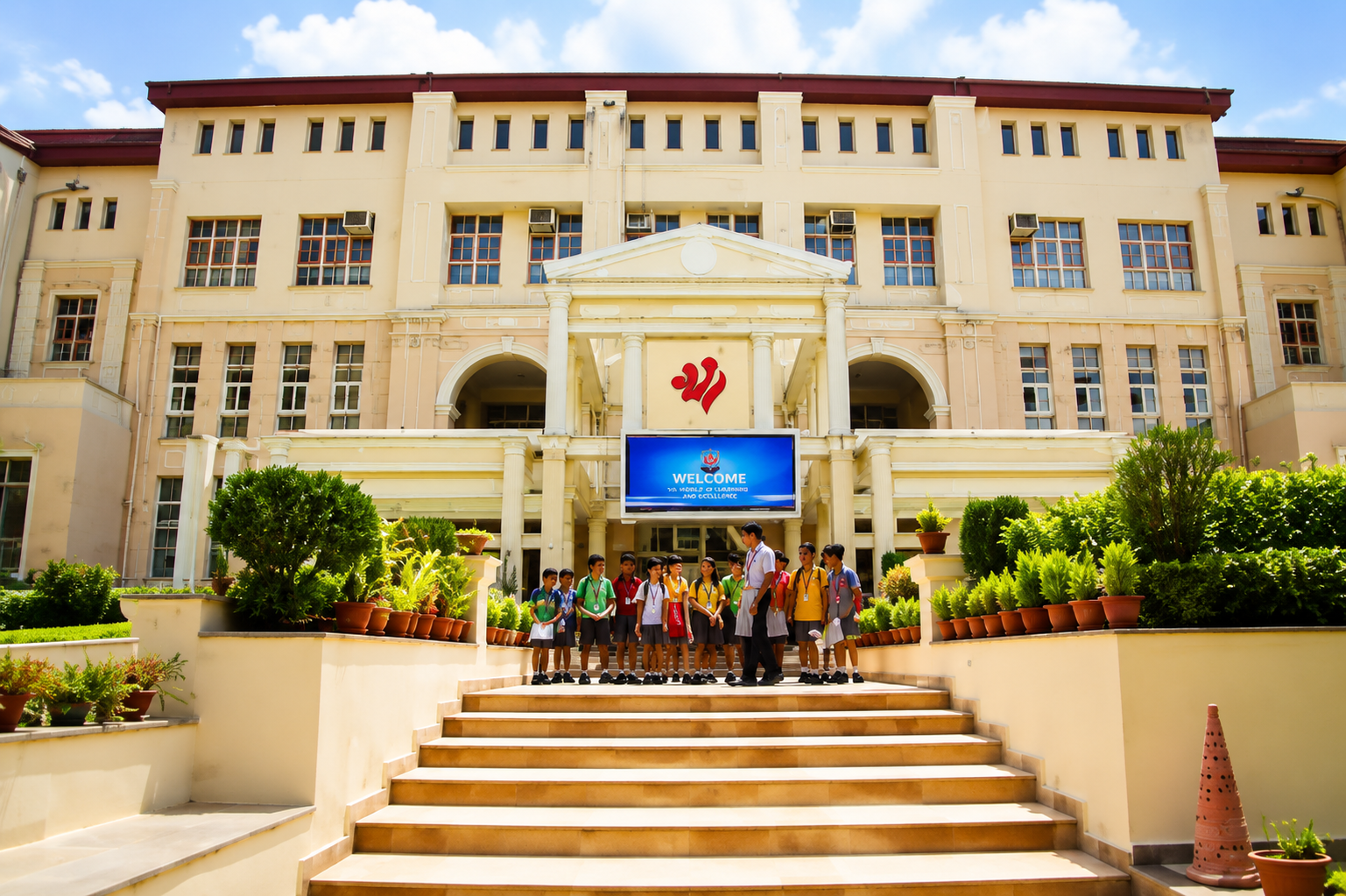
Picking the best ICSE schools in India means opting for educational institutions that find a proper balance between rigorous academic training and curiosity, creativity, values and practical learning. The best ICSE schools go above and beyond preparing kids for board examinations and help them develop into articulate, analytical, collaborative and responsible citizens.
The ICSE curriculum framework is set by the Council for the Indian School Certificate Examinations (CISCE). It allows for exposure to a broad range of subjects and internal assessment. This makes it possible for the best ICSE schools to combine traditional learning in classrooms with projects, laboratory experiments, arts, sports, research and real-world learning.
What Sets the Best ICSE Schools in India Apart?
A top-notch ICSE school provides students with solid education in English, mathematics, science, social studies and languages and encourages them to understand concepts instead of remembering answers. Assessments, practical, projects and presentations ensure that continual learning is equally important as final examination.
Also the best iCSE schools invest in holistic education and offer students opportunities in drama, music, arts, debating, games, oratory, activism, and community services.
Key features to consider:
Well-experienced teachers who use discussion, experiments, and project learning approach.
Quality libraries, laboratories, language facilities, and arts programs.
Individual attention in the form of reasonable-sized classes, mentoring, and counseling.
Equal attention to academic, sports, creative, and other aspects of the learner.
Inclusive teaching of students with different interests and competencies.
Regular communication between the teacher, student, and parent.
List of the 10 Best ICSE Schools in India
The following schools are considered good schools in India thanks to their academic traditions, teaching methods, curricula, and co-curriculum programs.
S.No. | ICSE School | Location | Features of Note | Official Website |
1. | Jamnabai Narsee School | Mumbai, Maharashtra | A well-balanced approach to education encompassing academics, activities, student assistance, and modern learning facilities. | |
2. | The Valley School | Bengaluru, Karnataka | An emphasis on reflective learning, environment-awareness, personal growth, and holistic education. | |
3. | Mallya Aditi international School | Bengaluru, Karnataka | A student-oriented teaching approach, Inquiry-based learning, creative activity, and wide participation of students. | |
4. | The Shri Ram School | Delhi / Gurugram | Fosters academic excellence, personal growth and cultural awareness. Strives to create a safe, inclusive and supportive environment that nurtures the young minds. Committed to personalised learning, tailoring their teaching to meet each student's unique needs and interests. | |
5. | Bishop Cotton Boys’ School | Bengaluru, Karnataka | A history of good institutional traditions, academic rigour, participation in sports, and opportunities for leadership. | |
6. | Bombay Scottish School | Mumbai, Maharashtra | Academic excellence and a well-balanced school experience involving participation in sports and cultural activities. | |
7. | The Doon School | Dehradun, Uttarakhand | School with a focus on leadership, boarding education, academics, sports, arts, and independent learning culture. | |
8. | Shikshantar School | Gurugram, Haryana | Open and inclusive spaces that reflect openness to learning. Enduring respect for children as thinkers and explorers. Structures and processes ‘led’ by children, experiential education, collaborative work and skilful feedback. | |
9. | La Martiniere for Boys | Kolkata, West Bengal | A prestigious academic reputation, structured learning, cultural activities, and extracurricular activities. | |
10. | Mayo College Girls’ School | Ajmer, Rajasthan | Prepare students to face new challenges and urges them to seek originality. Root a child in the rich Indian culture and tradition and teach them to respect every creed. Theirr curriculum and activities reflect this aim. |
Best ICSE Schools in India for Future-Ready Education
ICSE schools in India that offer future-ready education enable students to learn, adapt, communicate, and solve problems—not just score marks. They connect academic knowledge with practical experiences to make children ready for further studies, changing professions, and civil life.
Future readiness also means introducing children to innovate tools responsibly. Good schools provide AI, coding, robotics, and digital research along with media literacy, data awareness, ethics, creativity, and human judgement.
Future-focused Learning Criteria:
STEM education: Practical classes of science, math, coding, engineering ideas, and interdisciplinary projects.
AI education: Lessons that help to understand what AI is, its advantages, disadvantages, limitations, bias, privacy, and ethical uses.
Robotics programs: Opportunities to create, test, program, and improve models or devices.
Culture of innovation: Maker classes, design thinking, entrepreneurship club, exhibitions, and problem-solving contests.
Purposeful use of smart classrooms: Digital boards, simulations, multimedia materials, learning platforms.
Research and communication: Debate, writing, presentations, media literacy, and evidence-based research.
For instance, the Doon School points out that its AI Robotics Maker Space is a collaborative space where students will interact with technology, experimentation, and project work. The importance of such a space is in the guidance in learning rather than just having gadgets.
ICSE Learning: Rigorous Academics with Practical Application
CISCE administers the ICSE examination in Class X and the ISC examination in Class XII.The structure of ICSE curriculum is known for the breadth of the subjects, the syllabus detail, the emphasis on the English language and room for school-based work such as projects, assignments, practical work, and oral assessments.
In most cases, the ICSEexaminations have 80 percent external examination and 20percent internal assessment for most of the subjects. However, in many of the Group III subjects, there is a balance between 50 percent external assessment and 50 percent internal assessment and this makes consistent effort during the whole year very important.
How to Choose the Best ICSE School
Every institution has a different teaching style, speed, fees, philosophy, values, culture, and student support system. It is essential to find out whether this particular school will suit the child’s learning preferences and personality.
School visits give parents more insight than brochures do. They can observe the way students and teachers interact, learn how the school supports students with learning difficulties, visit libraries, laboratories and learn whether technology adds to good teaching practices or just serves as a marketing tool.
Admission checklist for parents:
Confirm ICSE or ISC affiliation using the official CISCE School Locator.
Find out how projects, practicals,and internal assessments are handled.
Learn about the condition of STEM labs, libraries, sports halls and arts facilities.
Find out class sizes, teacher availability, counselling and student safety policies.
Ask about artificial intelligence, robotics, coding, and digital citizenship courses.
Clarify travel times, annual tuition fees, additional payments and admission deadlines.
Talk to existing parents and students about the atmosphere in the school.
FAQs
1. What is the CISCE and how is it related to ICSE?
CISCE stands for the Council for the Indian School Certificate Examinations. CISCE administers the ICSE and ISC examinations at Classes X and XII respectively. Schools require CISCE affiliation to conduct these examinations.
2. Why do parents prefer ICSE schools?
Many parents find ICSE syllabus exhaustive, stress on English language skills, wide range of subjects and balanced mix of external and internal examinations. It may besuited toa student who learns better through reading,writing, practical activities and conceptual understanding. Suitability depends on individual child and school quality.
3. Is there education on AI and Robotics in ICSE schools?
The leading ICSE schools have courses on AI, coding, STEM activities, robotics club, and maker space. The standards may vary; therefore, it is advisable for the parent to inquire whether students engage in practicals through qualified educators. Holistic education also involves ethical and responsible use of technology.
4. What is holistic education in an ICSE school?
Holistic education aims at the development of intellectual, social, emotional, physical, creative, and moral qualities simultaneously. It comprises academics, along with sports, arts, leadership, wellness, cooperation, and community interaction. The purpose is well-rounded learners instead of only test performers.
5. What significance do smart classrooms have when selecting a school?
Smart classrooms might enhance lessons through visual aids, simulation, and interactivity. Nevertheless, they cannot serve as the primary criterion for selection. Better teachers, reading culture, laboratories, mentoring, and a good learning environment are much more significant.
6. What means do parents have to ensure an ICSE affiliation of a school?
Parents can utilize the official CISCE School Locator and search the schools by name, city, and state. The information about ICSE or ISC courses offered must be available on the school page. It is recommended to clarify this data from the school directly before enrollment.