
IB Schools in India: Curriculum, Benefits, and Schools to Know
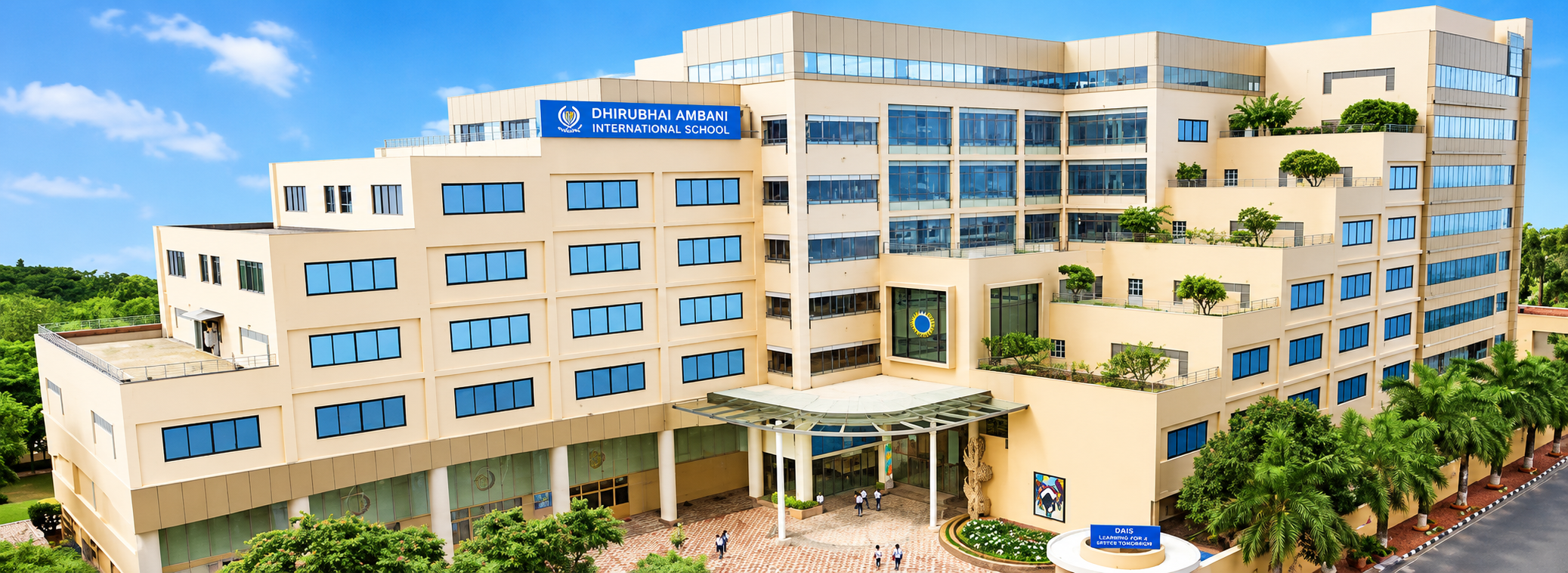
Image Credit: Dhirubhai Ambani International School
Education is changing rapidly, and parents in India are increasingly exploring different approaches to school education. Among these options, International Baccalaureate (IB) schools have gained attention for their focus on inquiry, critical thinking, creativity and international perspectives.
With IB programmes available across different age groups, students can follow a learning pathway that encourages them to understand concepts, ask questions, conduct research and apply their knowledge beyond the classroom.
What Is an IB School?
IB stands for International Baccalaureate, an international education framework designed to develop knowledgeable, curious and globally aware students.
Unlike an education system that focuses primarily on memorising information, the IB curriculum encourages students to understand concepts and connect classroom learning with real-world situations.
IB schools in India offer one or more of the four IB programmes:
Primary Years Programme (PYP) – for younger students
Middle Years Programme (MYP) – for students in the middle-school years
Diploma Programme (DP) – generally for students aged 16 to 19
Career-related Programme (CP) – combines academic study with career-focused learning
The programme offered can vary from one IB World School to another.
Growth of IB Education in India
The International Baccalaureate has been present in India for several decades, and interest in international education has continued to grow.
Today, IB World Schools can be found in several Indian cities, including Mumbai, Delhi, Bengaluru, Chennai, Hyderabad, Pune and Gurgaon.
The growing interest in IB education is linked to factors such as international university aspirations, flexible subject choices, research-based learning and the development of skills beyond traditional academics.
How Does the IB Curriculum Work?
The IB curriculum in India places strong emphasis on understanding rather than simply remembering information.
Students may be encouraged to:
Ask questions and investigate topics
Conduct independent research
Work on projects
Analyse information from different perspectives
Communicate their ideas
Collaborate with classmates
Apply classroom knowledge to real-world situations
This approach can help students become more independent learners and develop skills that are useful for higher education and professional life.
Major IB Programmes Offered in India
Primary Years Programme (PYP)
The IB PYP is designed for younger learners. It encourages children to explore subjects through inquiry and develop an understanding of the world around them.
Learning can involve projects, discussions, experiments and activities that connect different areas of knowledge.
Middle Years Programme (MYP)
The IB MYP is designed for students in the middle-school age group. It encourages students to connect academic subjects with real-world issues.
Students develop skills in research, communication, collaboration and critical thinking while studying a broad range of subjects.
Diploma Programme (DP)
The IB Diploma Programme is one of the most widely recognised IB programmes for students aged 16 to 19.
Students study a combination of subjects and complete additional components designed to encourage independent research, reflection and learning beyond individual subjects.
The DP can be particularly attractive to students planning to apply to universities in India or overseas.
Career-related Programme (CP)
The IB Career-related Programme combines academic study with career-oriented education.
It can be suitable for students who want to develop academic knowledge alongside practical and professional skills.
Popular IB Schools in India
Several established schools in India offer one or more IB programmes. Examples include:
Dhirubhai Ambani International School, Mumbai
American School of Bombay, Mumbai
Indus International School, Bengaluru
Stonehill International School, Bengaluru
The International School Bangalore
Ecole Mondiale World School, Mumbai
DPS International, Delhi NCR
American International School Chennai
Parents should check the specific IB programmes and authorisations offered by each school because not every school offers all four IB programmes.
Benefits of Studying in an IB School
1. Focus on Critical Thinking
IB students are encouraged to analyse information, ask questions and develop their own understanding of different subjects.
2. Inquiry-Based Learning
Instead of only receiving information from teachers, students are encouraged to investigate topics and discover answers through research and exploration.
3. International Perspective
The IB approach encourages students to understand different cultures, perspectives and global issues. This can help them develop a broader outlook.
4. Strong Communication Skills
Presentations, discussions, projects and collaborative activities can help students improve their written and verbal communication.
5. Independent Learning
IB programmes encourage students to take greater responsibility for their learning. They may need to research topics, manage assignments and reflect on their progress.
6. Research and Project Skills
Research is an important part of IB education. Students learn how to investigate questions, evaluate information and present their findings.
7. Preparation for Higher Education
The skills developed through IB education can help students prepare for university-level study, particularly when they need to manage independent research, assignments and complex subjects.
IB vs CBSE vs ICSE
India offers several major school education pathways, including CBSE, ICSE and IB. Each has a different structure and approach.
Feature | IB | CBSE | ICSE |
Approach | Inquiry and concept-based | Structured and syllabus-based | Broad and detailed curriculum |
Learning | Research and application | Academic and examination-focused | Strong subject depth |
International orientation | High | Moderate | Moderate |
Project work | Significant | Varies by school | Varies by school |
Subject flexibility | Higher in some programmes | Depends on level | Depends on level |
Global university focus | Strong | Broadly accepted | Broadly accepted |
The right choice depends on the student's learning style, academic goals, interests and future plans.
How to Choose the Right IB School in India
Choosing an IB school in India requires more than looking at rankings or reputation. Parents should consider several factors.
Check the IB Programme
Find out whether the school offers PYP, MYP, DP or CP, depending on the student's age and educational needs.
Consider the Curriculum
Parents should understand how subjects are taught, how students are assessed and how much emphasis is placed on projects and independent research.
Look at Subject Choices
For older students, subject availability can be particularly important. Students should check whether the school offers subjects that match their interests and future university plans.
Review Facilities and Activities
Sports, arts, laboratories, libraries, technology facilities and extracurricular activities can contribute to a student's overall school experience.
Consider University Guidance
For students planning to study abroad, parents may also want to understand the school's university counselling and guidance services.
Evaluate the Overall Cost
IB education can involve significant school fees, so families should consider tuition fees and other associated expenses before making a decision.
Is IB Education Suitable for Every Student?
IB education can be a good fit for students who enjoy asking questions, researching topics, working on projects and exploring ideas from different perspectives.
However, every student is different. Parents should consider the student's interests, learning preferences, academic goals and ability to adapt to the school's teaching and assessment methods.
The decision should be based on the individual student rather than choosing an education board only because it is considered popular.
The Future of IB Education in India
As Indian students increasingly explore universities and career opportunities around the world, international education pathways are receiving greater attention.
The IB education system in India offers an approach that combines academic learning with research, communication, creativity and global awareness.
For families considering an international curriculum, understanding the different IB programmes and comparing schools carefully can help them make a more informed decision.
Frequently Asked Questions About IB Schools in India
1. What does IB stand for in schools?
IB stands for International Baccalaureate. It is an international education framework that focuses on inquiry-based learning, critical thinking, research, communication and global perspectives.
2. What is an IB school in India?
An IB school in India is a school authorised to offer one or more International Baccalaureate programmes. These include the PYP, MYP, Diploma Programme (DP) and Career-related Programme (CP).
3. How many IB schools are there in India?
India has more than 270 IB World Schools, with schools offering different IB programmes across various cities and regions.
4. What are the benefits of studying in an IB school?
IB education can help students develop critical thinking, research, communication, problem-solving, collaboration and independent learning skills. It also provides exposure to international perspectives.
5. Is IB better than CBSE or ICSE?
There is no single curriculum that is best for every student. IB, CBSE and ICSE have different teaching approaches and assessment methods. IB may be suitable for students who prefer inquiry-based and internationally oriented learning.
6. Which are some popular IB schools in India?
Some well-known IB schools in India include Dhirubhai Ambani International School, American School of Bombay, Indus International School, Stonehill International School and The International School Bangalore. The programmes offered vary by school.
7. Is IB recognised by universities in India and abroad?
Yes. IB qualifications are recognised by universities and higher-education institutions in India and many countries worldwide. Students should check the specific admission and subject requirements of their chosen university.
Conclusion
IB schools in India provide an alternative approach to traditional school education, with an emphasis on inquiry, critical thinking, research and international perspectives.
From the IB Primary Years Programme to the IB Diploma Programme, students can access different learning pathways depending on their age and educational goals.
For parents, the best IB school is not necessarily the one with the biggest reputation. The right choice is a school whose IB programme, curriculum, teaching approach, facilities and learning environment match the student's needs and future aspirations.