The Quiet Champion — Lakshiv's Rise from Jalandhar
Not every champion makes headlines. Some just make history in their own hometown first.
In May 2026, in a modest college hall in Jalandhar Cantonment, an 11-year-old boy in a kickboxing uniform stepped onto the mat and did something that would eventually earn him a shot at national glory — even though most of India never heard about it.
Who He Is
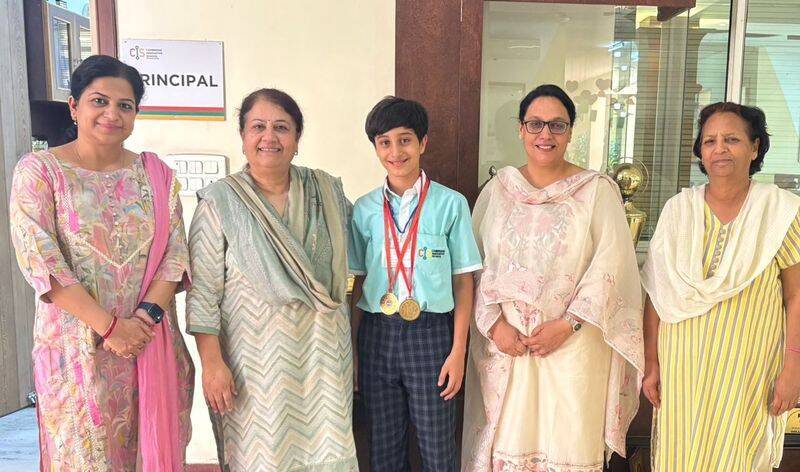
Lakshiv is a Class VI student at Cambridge Innovative School, Jalandhar. He is, by every outward description, an ordinary sixth-grader — he enjoys table tennis, keeps up with his schoolwork, and has moved between two schools without missing a beat academically. But behind the calm, soft-spoken exterior is a young combat-sports athlete who has been training, on and off, since kindergarten.
What He Achieved
At the 22nd Cadet Punjab Kickboxing Championship 2026, held at BD Arya College, Jalandhar Cantonment, Lakshiv competed in the Under-42 kg Point Fight category against a field of nearly 450 participants drawn from 23 districts across Punjab — a genuinely competitive state-level meet, not a small local event. He won gold.
That win did more than earn him a medal around his neck. It punched his ticket to the national-level kickboxing championship, held the following month in Madhya Pradesh — elevating him overnight from a promising state athlete to a national contender.
The Road That Got Him There
Lakshiv's journey has not been a straight line to the podium:
He began as a young karate enthusiast while still in kindergarten, training under coach Yadwinder Gupta.
The Covid-19 pandemic disrupted his training entirely — like thousands of other young athletes, he stepped away from the mat for an extended period.
He resumed serious practice only in 2023. In just three years since then, he went from a lapsed hobbyist to a Punjab state champion.
His mother, Dr. Karnica, a practising physiotherapist, has quietly managed his conditioning and recovery herself — no elite sports academy, no specialised diet plan, just home-cooked food and consistent discipline.
His father, Sandeep Rana, works in the merchant navy and was at sea during his son's biggest moment. The family had to rearrange a long-planned vacation to reunite with him because the dates clashed with the national championship — a small sacrifice that speaks to how seriously this "kids' tournament" is now being treated at home.
Why This Story Deserves More Attention
The comeback arc. Losing years of training to the pandemic and rebuilding a competitive edge in three years is a far steeper climb than it sounds — most young athletes who step away at that age never fully return to competitive form.
No shortcuts, no sponsorships. Lakshiv's rise has been powered entirely by family effort and local coaching, not the sports-science infrastructure that surrounds many young stars — making his story far more accessible and relatable to ordinary households.
Balance, not burnout. He continues to rank among the toppers in his class even as he trains competitively — quietly disproving the assumption that serious sport and serious studying can't coexist for a school-age child.
Character over combat. Despite training in a discipline built on physical confrontation, those closest to him describe a boy who stays composed and non-aggressive outside the ring — the kind of detail that rarely makes headlines but says the most about who he's becoming.
A sacrifice already being made at 11. Postponing a family reunion for a national championship is the kind of quiet trade-off usually associated with seasoned professional athletes — not sixth-graders.
Lakshiv's story is, in many ways, the story of Indian school sports as a whole: thousands of children training hard in gyms and academies far from any camera, waiting for their moment at the national stage. His gold medal may not have trended online, but it represents exactly the kind of grassroots sporting culture India's youth sports movement is trying to build.