From a Government School Classroom to the Moon
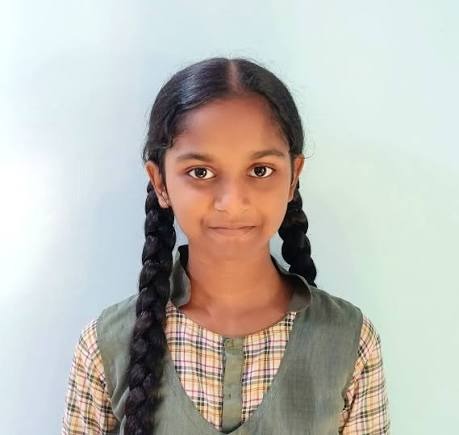
For Kandula Jessie, the road to space did not begin in a prestigious laboratory or an elite international school.
It began in a government school classroom in Dowleswaram, Andhra Pradesh.
The 14-year-old Class 10 student of Zilla Parishad Girls High School has now achieved something extraordinary: she has been selected as one of just 20 students from India for Mission ShakthiSAT, a global all-girls lunar CubeSat programme involving young girls from 108 countries. Nearly 12,000 girls registered for the programme, making Jessie's selection an exceptional achievement.
Mission ShakthiSAT is a global space-education initiative led by Chennai-based Space Kidz India, an organisation founded by Dr Srimathy Kesan, which works to encourage young people in space science and technology. For a teenager who dreams of becoming an ISRO scientist, it is a remarkable step towards the stars.
One of 20 Indian Girls Chosen for a Global Space Mission
Mission ShakthiSAT is being developed as the world's first global all-girls lunar CubeSat mission, bringing together thousands of young girls to learn about space technology, satellite systems and lunar exploration. The initiative aims to train and inspire girls in science, technology, engineering and mathematics across more than 100 countries.
From the enormous pool of registrations, only 20 girls were selected to represent India.
Jessie is the only selected student from Andhra Pradesh, making her achievement even more significant at the state level.
She will be part of a programme involving advanced learning in areas such as satellite systems, propulsion, thermodynamics and space technology—subjects that go far beyond the normal Class 10 curriculum.
The Teacher Who Saw Something Extraordinary
Jessie's journey demonstrates that talent does not always arrive with privilege.
Her father is a carpenter, and she studies at a government school. Her interest in science was recognised by her Physical Science teacher and Atal Tinkering Lab mentor, Manimala, who encouraged her to apply for the programme.
That encouragement became a turning point.
After school, Jessie began attending online space-science classes. What started as an opportunity to explore her interest in science soon became a demanding learning journey involving hundreds of lessons and advanced concepts.
Her selection shows the importance of something that can easily be overlooked in education: the ability of a teacher to recognise potential before the rest of the world does.
Learning About Space Beyond the Classroom
The Mission ShakthiSAT training is far removed from conventional school learning.
According to reports, the programme involves 21 modules and 550 sessions, taking students through subjects connected with satellite technology, space science and lunar exploration.
For Jessie, these are not merely extra classes.
They are preparation for participating in an international scientific project.
A Class 10 student who would ordinarily be learning the fundamentals of physics and mathematics is now being introduced to concepts connected with the design and development of a lunar mission.
That is what makes her achievement truly extraordinary.
The Girl Who Wants to Become an ISRO Scientist
Jessie's ambition is straightforward: she wants to become a scientist at ISRO.
Her selection for Mission ShakthiSAT brings that dream closer—not because it guarantees a future career in space research, but because it gives her something invaluable at this age: exposure.
She is entering a world where young people can see how satellites are designed, how space missions are planned and how scientific teams work together.
For a student from a government school, this exposure can change the way she imagines her own future.
Instead of seeing space science as something distant and inaccessible, Jessie is now being given the opportunity to participate in it.
Why Jessie's Story Matters
There are many talented school students in India.
Some excel in examinations. Others dominate sports, music, coding or the arts.
Jessie's achievement stands apart because it combines academic talent, scientific curiosity and international selection.
She was not simply declared a topper.
She competed for a place in a global space programme against thousands of students from around the world.
And she emerged among the very small group chosen to represent India.
Her story also carries another powerful message.
Talent is not restricted to expensive schools, specialised coaching centres or privileged backgrounds.
Sometimes, it is sitting quietly in a government-school classroom, waiting for someone to recognise it.
A New Generation Reaching for Space
India's space programme has traditionally been associated with scientists, engineers and astronauts.
Mission ShakthiSAT offers a glimpse of something different: a generation of schoolgirls being introduced to space science much earlier.
The initiative aims to involve 12,000 girls from 108 countries, giving them hands-on exposure to satellite development, scientific research and international collaboration.
Jessie is now part of that larger story.
She represents not just Andhra Pradesh or her school, but a new generation of young Indian girls who are beginning to imagine themselves as scientists, engineers and space researchers.
The Journey Has Only Just Begun
Kandula Jessie has not reached the Moon yet.
But she has already crossed a significant distance.
From a government school in Dowleswaram to a global lunar mission, her journey is a reminder that extraordinary achievement does not always begin with extraordinary circumstances.
Sometimes, it begins with a child's curiosity, a teacher's encouragement and the courage to apply for an opportunity that seems far bigger than oneself.
At 14, Jessie has already earned a place among India's young space talents.
Her dream is to become an ISRO scientist.
And if her journey so far is any indication, the sky may only be the beginning.