
Explore CISCE Schools in India: A Future-Ready Shortlist for Parents
Choosing the right school is one of the more consequential decisions a parent makes, and for families leaning toward the CISCE board, the options at the top of the list tend to share a few things in common: rigorous academics, strong co-curricular programmes, and a track record that goes back decades in some cases. This shortlist looks at ten of India's most established CISCE-affiliated schools, spread across Mumbai, Bengaluru, Dehradun, Delhi NCR, and Kolkata, and what actually sets each one apart.
Rather than just ranking them, the goal here is to give a genuine sense of what each school specialises in — the academics, the extracurricular strengths, and the particular philosophy that shapes daily life on campus — along with a direct link to the school's official website for anyone doing deeper research. CISCE itself, through its ICSE and ISC examinations, is known for placing heavy weight on English proficiency, detailed internal assessment, and a broad subject spread, which is part of why so many long-established schools have stayed loyal to the board even as newer curricula have entered the Indian market.
It's also worth noting just how differently these ten schools interpret that same CISCE framework. Some, like The Doon School and Bishop Cotton Boys' School, lean heavily into residential, character-building traditions dating back to the colonial era. Others, like The Valley School and Shikshantar, take a far more progressive, exploration-first approach to early education before transitioning into board-style assessment in the senior years. That range is genuinely useful for parents to understand before assuming that "CISCE school" means one single kind of educational experience.
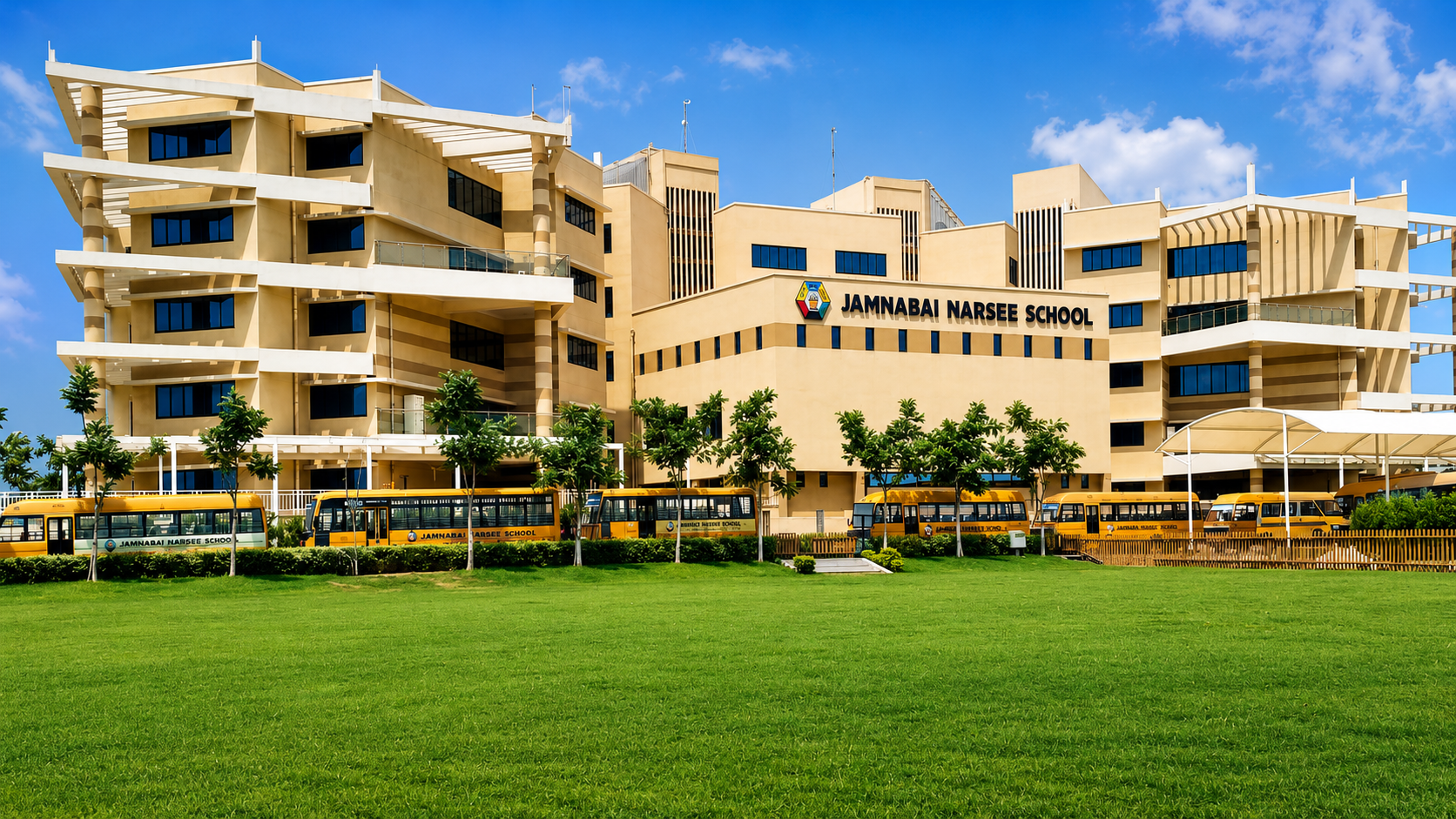
1. Jamnabai Narsee School, Mumbai, Maharashtra
Established in 1971 in the Juhu area of Mumbai, Jamnabai Narsee School has grown into one of the country's most recognised co-ed day schools, consistently ranked among Mumbai's top three. It offers a genuinely broad academic spread, holding affiliations with CISCE, Cambridge International, the IB, and NIOS under one roof, with an enrolment of nearly 4,800 students across its campus.
Academics
Comprehensive ICSE and ISC programme with strong results in national board examinations
Extracurriculars
Wide-ranging sports facilities, performing arts, and a dedicated STEM and robotics programme
Specialisation
A distinctive Co-operative Education (CO-OP) programme for Classes 11–12 that gives senior students structured exposure to real workplace environments
Campus life
GPS-tracked transport network, modern science and computer labs, and a calendar full of inter-house cultural and sporting events
Website
2. Mallya Aditi International School, Bengaluru, Karnataka
Founded in 1984 in Yelahanka, Mallya Aditi International School has built a reputation for blending Indian and international pedagogy, and regularly features among the top co-ed schools in Bengaluru surveys. Students choose between ICSE/ISC and Cambridge IGCSE/AICE tracks from Grade 9 onward, on a five-acre campus known for its award-winning architecture.
Academics
Dual-curriculum flexibility, letting students pick between ICSE/ISC and Cambridge pathways
Extracurriculars
Visual arts studio, a dedicated Tinker Lab for design thinking, basketball, football, and swimming
Specialisation
Compulsory week-long Grade 12 internships that expose students to real corporate and field environments before graduation
Community initiatives
Student-led programmes such as For Love of Science, which takes science lessons to underserved government schools nearby
Website
3. The Cathedral & John Connon School, Mumbai, Maharashtra
With roots going back to 1860, this South Mumbai institution is one of the oldest schools in the country and is widely regarded as among India's most prestigious. It offers a choice between CISCE and IB/IGCSE pathways, spread across five distinct school sections with an enrolment of roughly 3,000 students.
Academics
ICSE/ISC alongside IGCSE and IB Diploma options, with a strong record of university placements
Extracurriculars
The Cathedral Model United Nations, Interact Club, Nature Club, and a long-standing school choir tradition
Specialisation
An emphasis on skill-based, question-driven learning rather than rote textbook study
Notable alumni
Includes figures across science, law, industry, and the arts, reflecting the school's 165-year academic legacy
Website
4. The Doon School, Dehradun, Uttarakhand
India's first Round Square member school, The Doon School is an all-boys residential institution that has shaped generations of leaders since its founding in 1935. It follows the ICSE/ISC curriculum alongside the IB Diploma, set across a sprawling green campus in Dehradun.
Academics
ICSE and ISC curriculum combined with the IB Diploma option for Classes 11–12
Extracurriculars
Strong emphasis on the Round Square IDEALS framework — adventure, leadership, service, and internationalism
Specialisation
A dedicated Art and Media School and a full residential boarding structure that shapes character alongside academics
Selection process
A competitive entrance examination and interview assessing academics, extracurricular interests, and personal qualities
Website
5. Bishop Cotton Boys' School, Bengaluru, Karnataka
Founded in 1865 and often referred to as the "Eton of the East," Bishop Cotton Boys' School is a day-cum-boarding institution with one of the longest legacies among CISCE schools in South India. Its 14-acre campus in the heart of Bengaluru is built around a strong discipline-and-character framework.
Academics
ICSE and ISC curriculum with consistently strong board exam performance
Extracurriculars
A five-lane swimming pool, indoor badminton and squash courts, and regular inter-house dramatics, music, and quiz competitions
Specialisation
A long tradition of producing leaders in the armed forces, science, and public service among its alumni
Class sizes
Small average class sizes of around 30 students, allowing for closer individual attention
Website
6. Bombay Scottish School, Mahim, Mumbai
With a legacy dating back to 1847, Bombay Scottish School is one of Mumbai's oldest and most consistently high-performing CISCE institutions, regularly placing among the top schools nationally in ICSE and ISC results. Its heritage Mahim campus includes a chapel and library housed in a black-granite colonial-era building.
Academics
ICSE/ISC curriculum with results regularly ranking among the top three in India
Extracurriculars
Nature Club, Interact Club, Scouts and Guides, and a full range of team sports including football and swimming
Specialisation
A heritage colonial-era campus paired with strong technology integration in day-to-day teaching
Languages
Hindi and French offered as second languages, with Marathi taught as a compulsory third language up to Class VII
Website
7. The Shri Ram School, Delhi NCR
Founded under the Shri Ram Education Trust — the same family behind Shri Ram College of Commerce — The Shri Ram School operates campuses across Vasant Vihar in Delhi and Moulsari and Aravali in Gurugram, known for its progressive take on the ICSE curriculum. Admissions here are notably selective, with demand consistently exceeding available seats.
Academics
ICSE/ISC curriculum delivered with a strong focus on conceptual clarity and experiential learning
Extracurriculars
Extensive music, drama, and visual arts programmes alongside a full sports curriculum
Specialisation
A distinctive emphasis on character development and community service woven directly into the academic programme
Multi-campus network
Separate campuses catering to different age groups across Delhi and Gurugram, run under a shared educational philosophy
Website
8. La Martiniere for Boys, Kolkata, West Bengal
One of the oldest schools in the country, La Martiniere for Boys was established in 1836 under the will of Major General Claude Martin and remains one of Kolkata's most prestigious CISCE institutions, known for its Anglican heritage and rigorous academics. It shares its origins with sister schools in Lucknow and Lyon, France.
Academics
ICSE and ISC curriculum with a long-standing record of academic excellence
Extracurriculars
Wide-ranging inter-school competitions at state, national, and occasionally international levels
Specialisation
Deep-rooted house and yearbook traditions that reinforce nearly two centuries of institutional heritage
Recognition
The Founders Gold Medal for academics remains one of the school's most prestigious annual honours
Website
9. The Valley School, Bengaluru, Karnataka
Founded in 1978 by philosopher Jiddu Krishnamurti, The Valley School takes a markedly different approach from conventional CISCE schools, built around minimal testing in the early years and a strong emphasis on independent, self-directed thinking. Its 120-acre campus south of Bengaluru is set amid forested hills and farmland.
Academics
A Mixed Age Group learning programme through Grade 9, transitioning into standard ICSE/ISC curriculum for senior classes
Extracurriculars
Extensive outdoor education, nature-based field trips, and a strong focus on the arts
Specialisation
An almost exam-free approach until Grade 9, prioritising exploration and self-guided learning over rote assessment
Boarding option
Limited hostel accommodation available for outstation students enrolled in the ISC programme
Website
10. Shikshantar School, Gurugram, Haryana
Shikshantar School in Gurugram has built its identity around progressive, experiential education, with an evaluation system designed to inspire rather than intimidate, and a curriculum that leads into the CISCE board for senior classes. The school treats teachers, parents, and students as equal partners in tracking a child's progress.
Academics
CISCE-aligned ICSE and ISC curriculum with continuous, observation-based assessment
Extracurriculars
Strong focus on gross motor development, performing arts, and creative expression through music, dance, and theatre
Specialisation
An evaluation philosophy that treats assessment as a learning tool rather than a source of judgement or fear
Assessment style
Daily class observations and individual goal-setting used alongside formal exams to track development
Website
How These Schools Compare at a Glance
With ten strong options spanning five cities, it helps to see the basics side by side before reading into each school's individual character.
School | City | Day / Boarding | Signature Strength |
Jamnabai Narsee School | Mumbai | Day | Multi-board flexibility (ICSE/Cambridge/IB) |
Mallya Aditi International School | Bengaluru | Day | Cambridge and ICSE dual-track options |
The Cathedral & John Connon School | Mumbai | Day | Historic legacy with IB/IGCSE options |
The Doon School | Dehradun | Boarding | Round Square leadership tradition |
Bishop Cotton Boys' School | Bengaluru | Day-cum-boarding | Discipline and sporting excellence |
Bombay Scottish School | Mumbai | Day | Consistently top national ICSE/ISC results |
The Shri Ram School | Delhi NCR | Day | Character-driven, experiential learning |
La Martiniere for Boys | Kolkata | Day (few boarders) | Nearly two centuries of academic heritage |
The Valley School | Bengaluru | Day-cum-boarding | Krishnamurti-inspired, exam-light early years |
Shikshantar School | Gurugram | Day | Progressive, observation-based assessment |
Final Thoughts
These ten schools represent very different philosophies within the same CISCE framework — from The Doon School's residential leadership tradition to The Valley School's Krishnamurti-inspired approach to learning. What ties them together is a consistent commitment to academic rigour paired with genuine investment in extracurricular and character development, which is ultimately what makes a school "future-ready" rather than just exam-focused.
For parents narrowing down a shortlist, the smartest next step is usually a campus visit rather than relying on rankings alone. Two schools can share the same board affiliation and still feel completely different once you see how students interact, how classrooms are run day to day, and how much weight the school genuinely places on the extracurricular side of its prospectus versus what shows up in marketing material.
Frequently Asked Questions
1. What does CISCE stand for, and how is it different from CBSE?
CISCE stands for the Council for the Indian School Certificate Examinations, which conducts the ICSE (Class 10) and ISC (Class 12) examinations. It is generally considered to place more emphasis on English language proficiency and detailed, application-based assessment compared to CBSE.
2. Which of these schools offer boarding facilities?
The Doon School is a fully residential boarding school for boys, while Bishop Cotton Boys' School offers a day-cum-boarding option. Most of the others, including Jamnabai Narsee, Cathedral & John Connon, and Bombay Scottish, operate primarily as day schools.
3. Are any of these schools open to international curricula alongside ICSE?
Yes. Jamnabai Narsee School offers Cambridge and IB pathways, Mallya Aditi offers Cambridge IGCSE and AICE, and Cathedral & John Connon offers both IGCSE and the IB Diploma alongside the standard ICSE/ISC track.
4. What makes The Valley School different from the other schools on this list?
The Valley School follows the educational philosophy of Jiddu Krishnamurti, minimising formal testing until Grade 9 and prioritising self-directed learning over conventional assessment, before transitioning into the standard ICSE/ISC curriculum for senior classes.
5. Which schools on this list are considered the oldest?
La Martiniere for Boys, established in 1836, and The Cathedral & John Connon School, founded in 1860, are among the oldest institutions on this list, both with nearly two centuries of educational history.
6. Do these schools offer strong extracurricular programmes alongside academics?
Yes, all ten schools place significant emphasis on extracurriculars, ranging from Bishop Cotton's sports infrastructure to The Shri Ram School's focus on music, drama, and community service.
7. Is Bombay Scottish School only for Christian students?
No. While Bombay Scottish School was founded by Scottish Christian missionaries and retains its Christian heritage, it admits students of all backgrounds and operates as a mainstream co-educational CISCE day school.
8. How can parents find official information about admissions for these schools?
Each school's official website, linked above, is the most reliable source for admission timelines, entrance procedures, and fee structures, since these details are updated by the schools directly each academic year.
9. Which schools on this list are all-boys institutions?
The Doon School, Bishop Cotton Boys' School, and La Martiniere for Boys are all-boys schools, while the remaining schools on this list are co-educational.
10. What should parents prioritise when comparing CISCE schools like these?
Beyond board affiliation, it's worth weighing each school's specific academic pathways, extracurricular strengths, and underlying philosophy — a residential leadership-focused school like The Doon School suits a very different student than a self-directed learning environment like The Valley School.